Interactive Map for Mobile
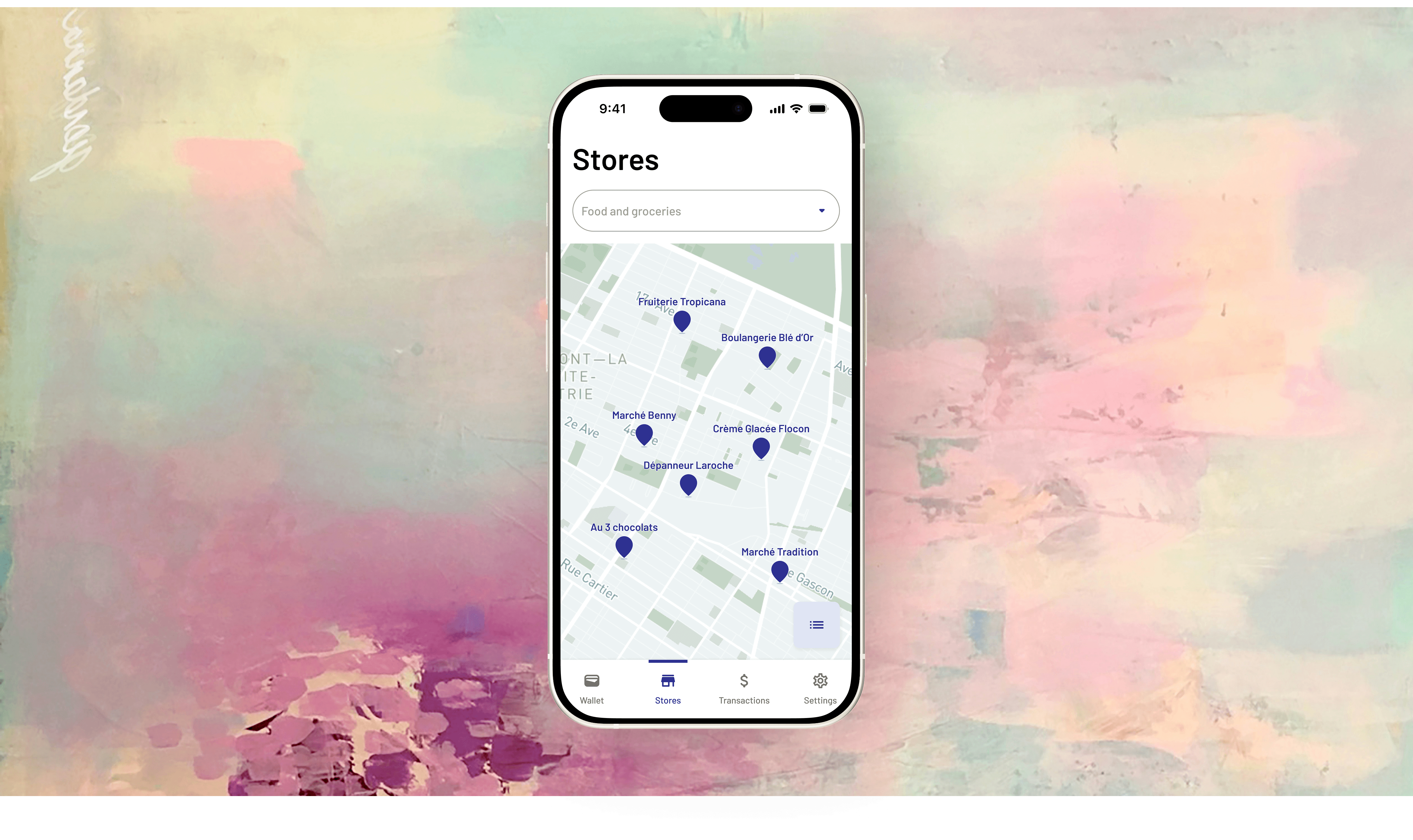
Hello users originally relied on a static list of participating businesses, which proved inconvenient for on-the-go use. I designed a mobile interactive map that enables users to quickly locate stores and check their balance in real-time.
Product Design
Project Overview
Hello Network is a company that offers tailored incentives, gift cards, and reward programs to support local businesses and strengthen community ties between consumers, merchants, workers, and employers.
In the spring and summer of 2022, I had the opportunity to work on a new feature for Hello’s mobile app: an interactive map that helps users effortlessly locate businesses of interest. Collaborating closely with Hello’s Head of Product, I took charge of the strategy, research, and the complete UX and UI design for this feature.
The Problem
After purchasing an incentive offer, Hello users received a static list of participating businesses where they could spend their balance. However, this format lacked the flexibility and convenience needed for users to access it quickly while on the go.
The Solution
Our goal was to create a seamless experience for users to quickly locate participating businesses, find directions, and effortlessly check their remaining balance available for spending at these locations.
Understanding the Context
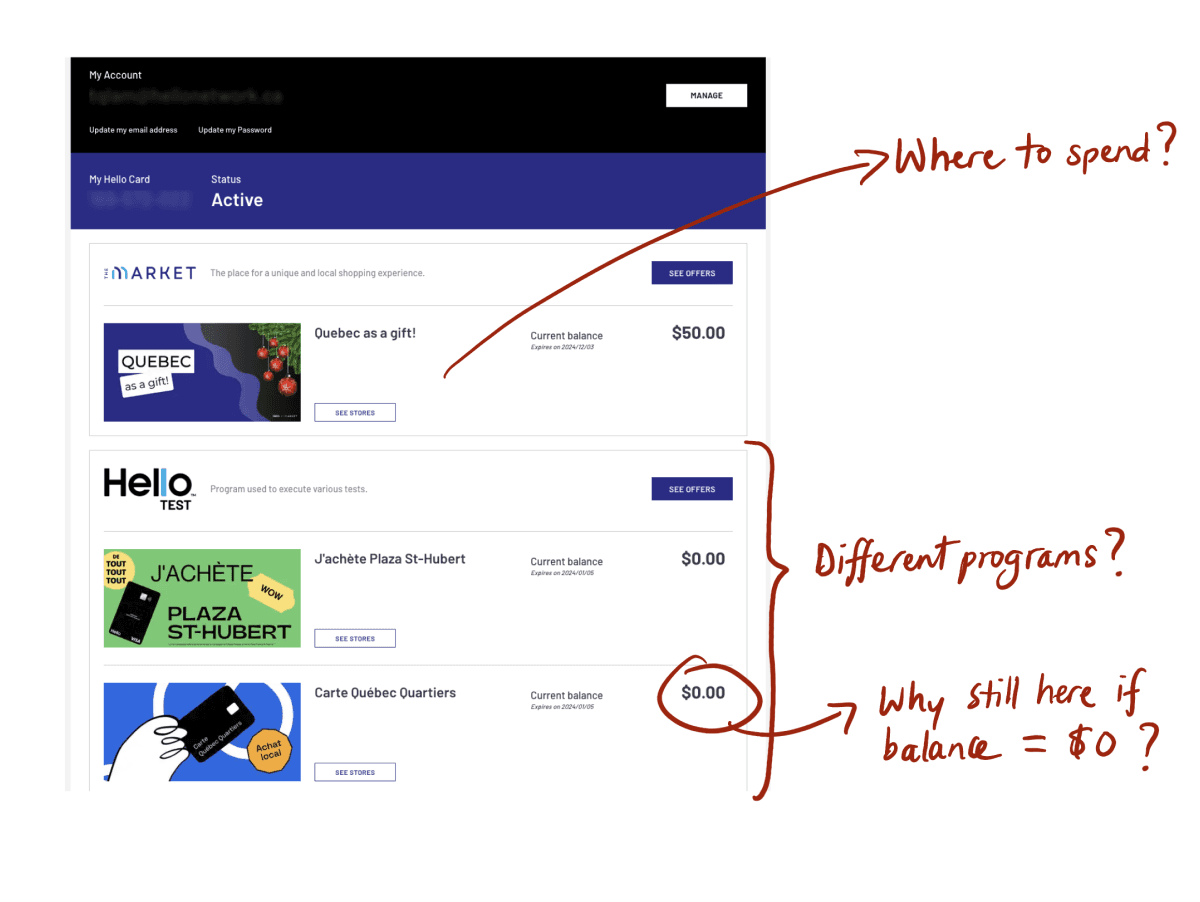
I led an audit of Hello’s customer account experience, focusing on how effectively it supported both balance visibility and account management. By analyzing user feedback and business context, I identified a key gap: the experience did not clearly help users understand where their balances could be spent. This resulted in frequent confusion at the point of purchase when users attempted to pay at non-participating stores.
Identifying Needs
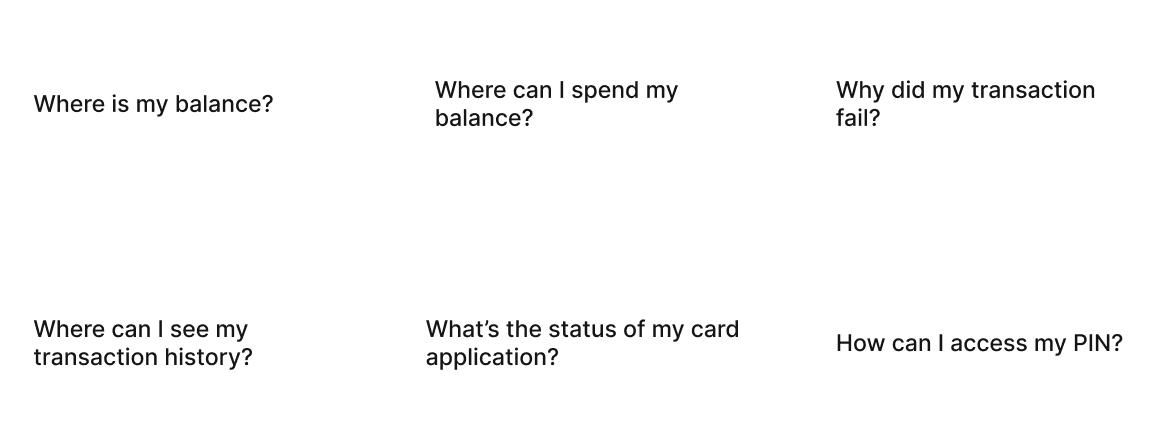
Given constraints around time and research budget, I leveraged existing internal knowledge to inform the discovery process. I collaborated closely with our Customer Service Manager to analyze recurring support patterns and extract user insights from real customer interactions.
This approach allowed us to prioritize the most pressing user needs by compiling and synthesizing the most common questions and friction points reported through support channels.
Prioritizing User Needs
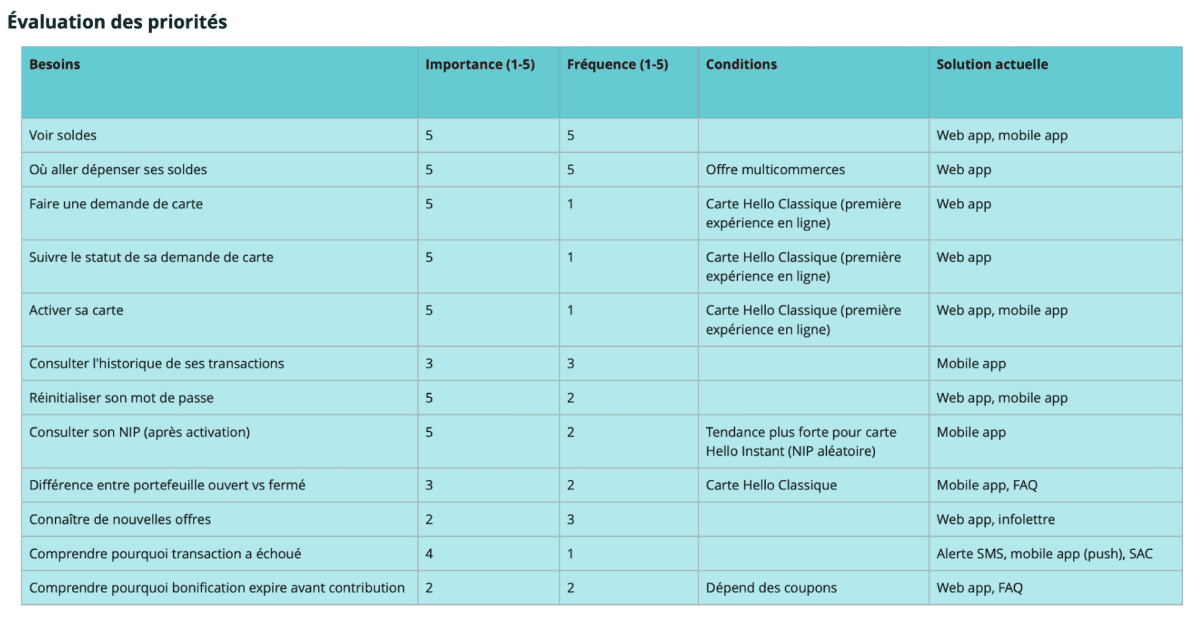
By evaluating each user need by importance and frequency, I was able to identify the most pressing ones:
1) viewing account balances, and
2) understanding where to spend those balances.
Visualizing Balances and Eligible Stores
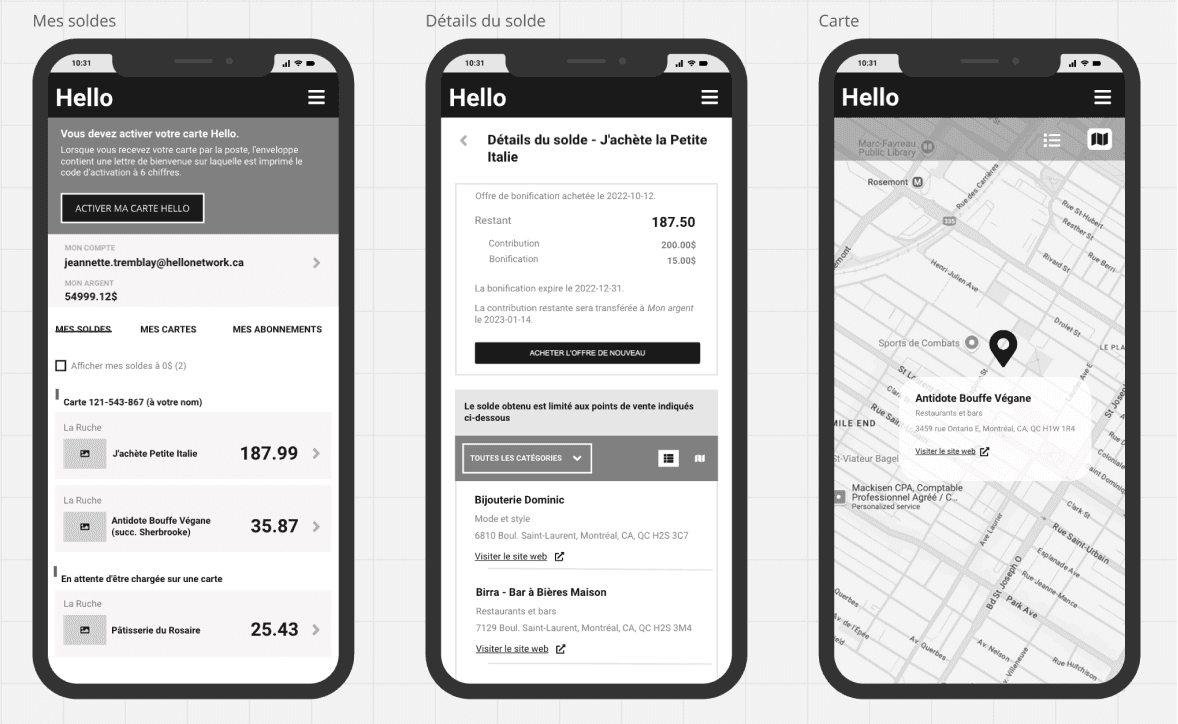
Before finalizing the decision to integrate this feature into the Hello mobile app, I first explored how user balances and participating stores could be displayed in the My Account section of the Hello website, as originally planned. However, as the requirements became more defined and the design grew more complex, it became clear that a mobile app experience would be a better fit.
Final Design
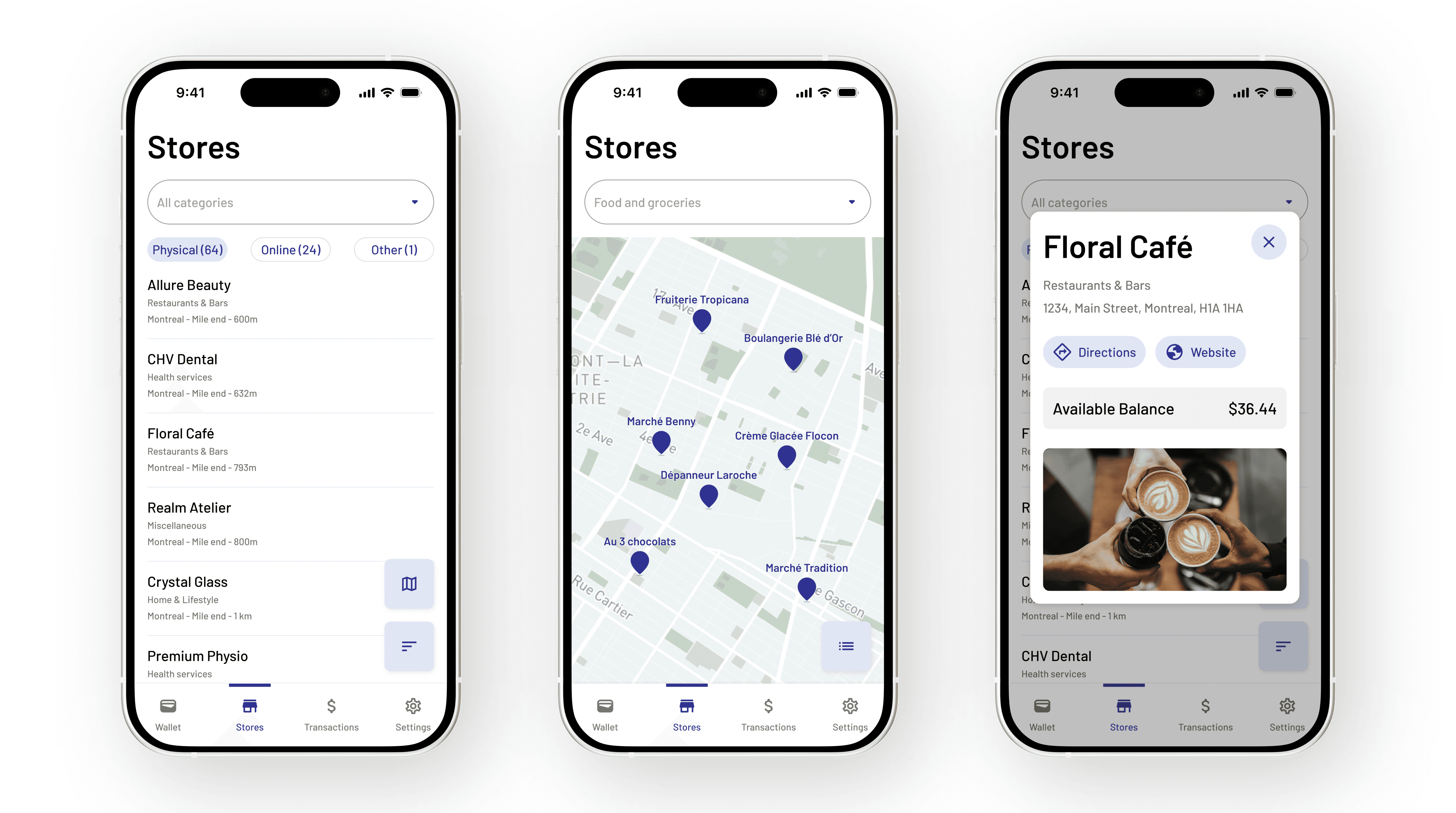
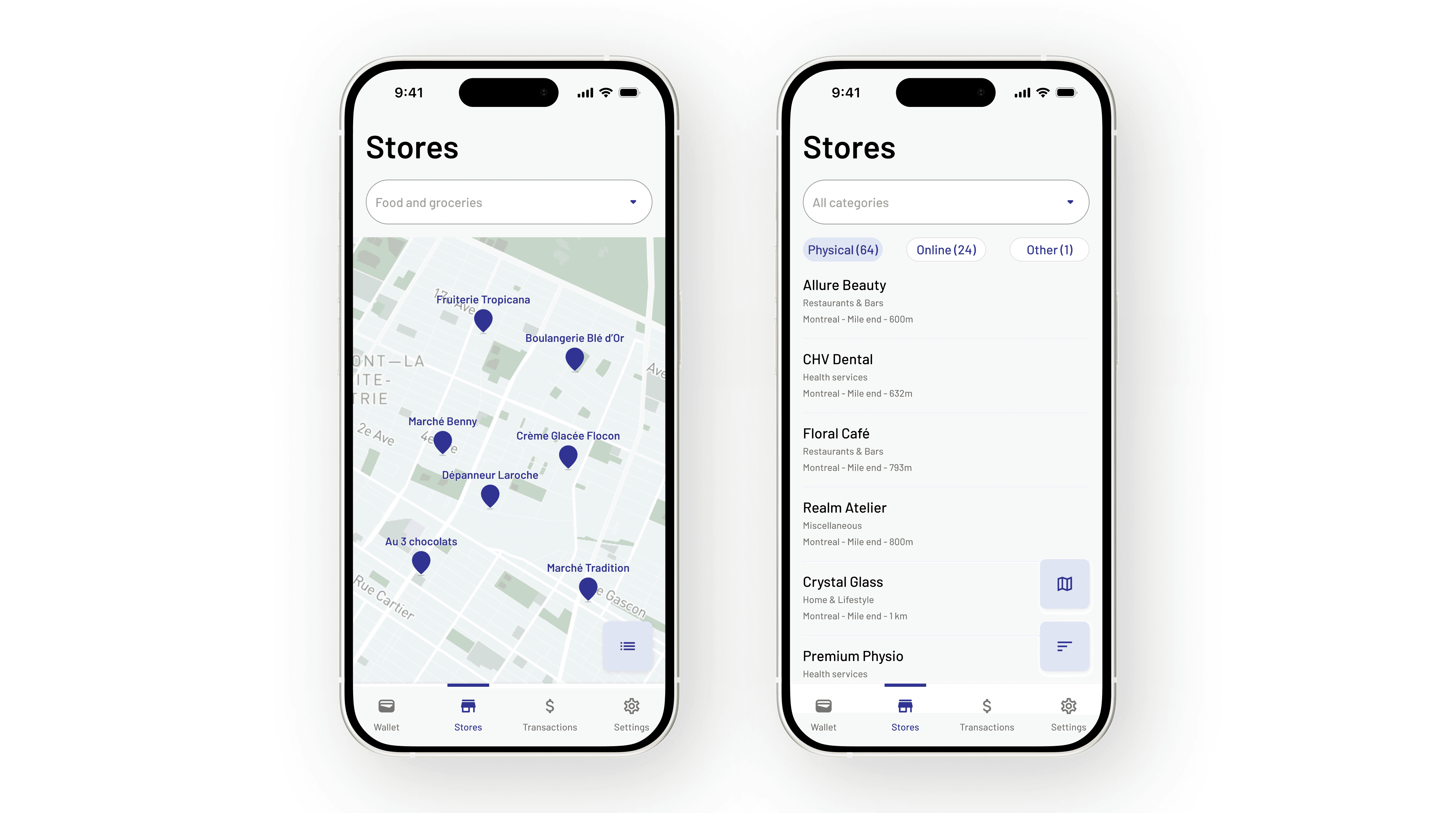
Seamless toggle between list and map views of participating stores
Dynamic map that allows users to filter by store category;
Intuitive list that can be sorted alphabetically and by user proximity;
Detailed view of each store showing user's available balance in real time.
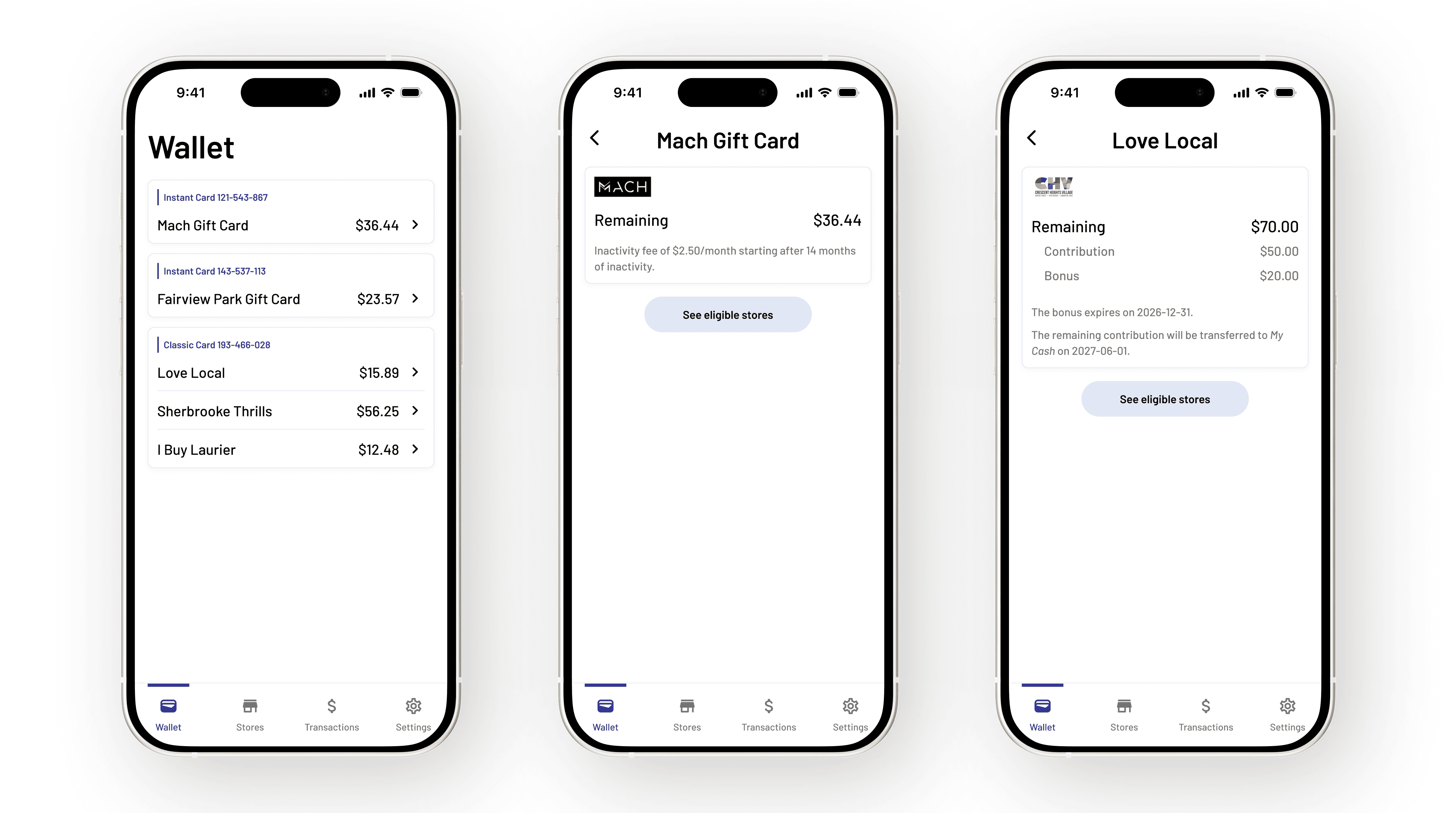
Improved wallet interface
Clearer visual hierarchy to communicate Hello card and gift card relationships;
Enhanced balance visibility for easier scanning;
Reusable components to streamline development and ensure UI consistency.
Impact
User Growth: Strategic UX improvements contributed to a 23% increase in application downloads during the launch period.
Operational Efficiency: Despite only 50% of the customer base initially migrating to the app, we achieved a 15% reduction in total customer service tickets.
Friction Removal: By addressing the two primary sources of support inquiries (balance clarity and store locations), we successfully shifted the user behaviour from "call to ask" to "open to see."
Conclusion
The introduction of the interactive map and enhanced balance display marked a pivotal shift for the Hello mobile app. By transforming how users discover local merchants and track their balances, we moved the product from a static utility to a dynamic community tool.